Tags :
Share This :
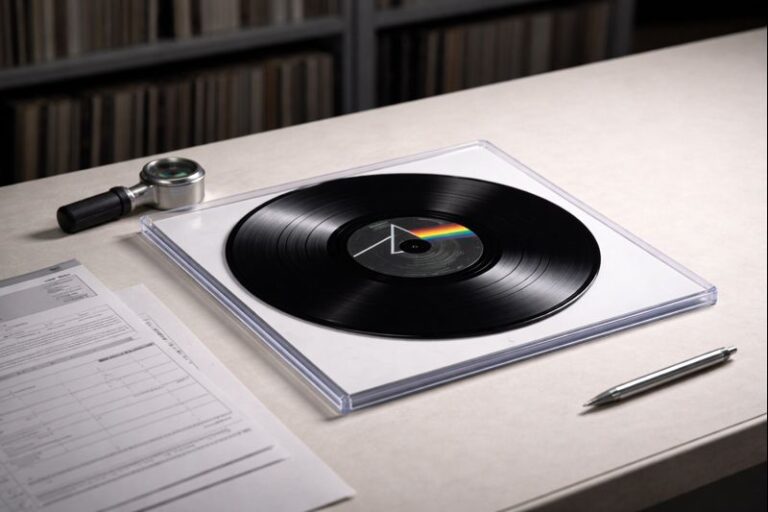
For much of its modern history, vinyl record collecting has been defined by passion rather than structure. Condition mattered, scarcity was understood intuitively, and value was often negotiated through experience instead of documentation. What has changed in recent years is not the enthusiasm for vinyl, but the infrastructure surrounding it.
As of 2025, graded vinyl records are no longer an experimental offshoot of music memorabilia collecting. Without hype or speculative language, the category now exhibits characteristics associated with market maturation: sustained percentage-based growth across multiple years, increasing value concentration per record, and repeat participation from informed collectors. These are not signals of excitement alone—they are signals of normalization.
When examined over time, vinyl record grading activity reflects a category moving beyond early adoption and into validation. The most meaningful indicators are not isolated surges, but consistent percentage gains compounded year over year, particularly when those gains are driven by collector behavior rather than submission volume alone.
Vinyl collectors have always practiced preservation. Long before formal grading, serious collectors stored records carefully, controlled handling, and maintained separate listening copies. These habits reflected an understanding that condition directly influenced value, even if that value was not always fully realized.
What was missing was standardization. Condition existed, but it was subjective. Transactions relied on trust, reputation, and descriptive language that varied widely between sellers. This approach worked within small communities but introduced friction as collections moved into estates, auctions, and institutional settings.
As collections changed hands, the absence of consistent condition assessment became a liability. Identical records could be described—and valued—very differently depending on context. This pattern mirrors early stages in other collectible categories, where grading frameworks emerged not to create collectibility, but to stabilize and clarify it.
Vinyl record grading reflects a similar evolution. The shift underway is not about commoditization, but alignment—aligning preservation practices with long-term value recognition. Increasingly, collectors treat certain records not only as playback media, but as preserved cultural assets.
Short-term increases are common in emerging markets and often reflect novelty. What distinguishes a maturing category is sustained percentage growth over multiple consecutive years, especially when that growth accelerates rather than resets.
Viewed longitudinally, vinyl record grading activity follows this pattern. Early periods showed modest percentage gains consistent with proof-of-concept adoption. Subsequent years demonstrated materially higher year-over-year growth, followed by continued expansion rather than contraction.
The most instructive signal, as of 2025, is the divergence between value growth and submission growth. Total realized value increased at a meaningfully higher percentage rate than the number of records graded. This suggests that growth is being driven less by volume and more by selectivity.
Collectors are not grading indiscriminately. They are choosing which records merit formal preservation. The resulting increase in average value per graded record reflects growing confidence in grading as a long-term strategy rather than a one-time experiment.
Auction outcomes reinforce this interpretation. As of 2025, graded vinyl records—particularly early pressings, limited releases, and high-condition examples—have frequently achieved substantial percentage increases over pre-sale expectations and prior private-market valuations. In some cases, realized prices have exceeded expectations by several multiples. These results are most consistent where grading clarifies true condition scarcity rather than where demand alone drives interest.
Taken together, these patterns suggest a transition from adoption to validation. Percentage-based growth driven by value density, rather than sheer volume, is a hallmark of a stabilizing collectible category.
Liquidity in collectibles is often constrained by uncertainty. In vinyl collecting, that uncertainty has historically centered on condition. Even experienced buyers have absorbed significant risk when transacting remotely or at scale.
Vinyl record grading reduces this friction by introducing standardized condition assessment. A graded record communicates preservation status in a consistent format, establishing a shared baseline for buyers, sellers, and intermediaries. Nuance remains, but ambiguity is reduced.
As a result, transactions become more efficient. Buyers gain confidence. Sellers gain clarity. Auction houses and appraisers benefit from streamlined cataloging and clearer price discovery. Improved liquidity does not imply inflated pricing; it supports more accurate pricing.
Over time, this efficiency broadens participation. Collectors previously hesitant to engage at higher levels become more active. Estates gain clearer pathways to value realization. Institutions can catalog, insure, and transfer holdings with greater confidence.
Data is the quiet engine behind every mature collectible market. Over time, aggregated information about condition scarcity and survival rates reshapes how value is understood.
In vinyl collecting, scarcity has long been described anecdotally—“rare in clean condition” or “hard to find at this level.” Population reporting transforms these assumptions into observable data. As graded populations accumulate, condition rarity becomes visible rather than inferred.
As of 2025, the population report has begun to materially influence market behavior. Records once assumed to be plentiful have proven exceptionally scarce in high condition, prompting valuation adjustments when that scarcity is documented. Auction results increasingly reflect this dynamic. Graded records with low high-grade populations have shown pronounced percentage increases compared to ungraded or ambiguously described examples, in some cases realizing multiples of prior market norms.
This is not a short-term anomaly. It represents a data-driven correction that emerges as population awareness improves. Over time, data compounds, supporting more stable valuations and more informed collecting strategies.
Importantly, data does not create value. It clarifies it. When paired with physical preservation, documentation allows value to persist across ownership cycles rather than being renegotiated with each transaction.
The significance of the most recent period lies in proportional change rather than absolute scale. The percentage increase in total value materially exceeded the percentage increase in submissions, signaling a shift in intent.
Collectors, estates, and institutions are increasingly treating grading as infrastructure rather than novelty. This aligns with broader movements in alternative collectibles, where participants seek assets that combine cultural relevance with physical permanence.
When grading infrastructure and collector expectations align, markets tend to mature quietly. As of 2025, graded vinyl appears to be entering this phase—not through speculation, but through normalization.
For collectors, graded vinyl reinforces the importance of long-term thinking. Preservation decisions increasingly carry downstream implications for liquidity, valuation, and legacy planning. Population awareness allows collectors to prioritize scarcity and condition strategically, strengthening stewardship without diminishing enjoyment.
Grading does not replace listening. It clarifies intent. As with other collectible categories, distinguishing between records meant for play and those meant for preservation becomes part of responsible collecting.
Estates often struggle to realize full value due to inconsistent condition reporting. Grading introduces clarity, reducing misclassification and underestimation. As reflected in auction outcomes as of 2025, standardized condition reporting has contributed to substantial percentage increases in realized value for high-condition records.
For auction houses, grading simplifies cataloging and reduces buyer hesitation. When condition is documented rather than debated, transactions rely less on persuasion and more on verified attributes.
As vinyl records increasingly function as preserved collectibles, labels and rights holders gain new strategic options. Limited releases, archival editions, and special pressings can be designed with long-term preservation in mind.
Grading enables intentional collectible formats—records produced not only for consumption, but for stewardship—reinforcing the cultural and historical role of physical media in a digital era.
The maturation of graded vinyl records is best understood as structural rather than speculative. Sustained percentage-based growth, increasing value concentration, repeat collector behavior, auction performance, and population awareness all point toward durability.
Preservation enables value. Standardization enables liquidity. Data enables clarity.
Together, these elements support a collectible category moving steadily toward maturity. As of 2025, graded vinyl’s trajectory reflects alignment rather than acceleration—aligning preservation practices with the enduring cultural and financial value of recorded music.
At Vintage Media Grading (VMG), we help collectors protect and elevate the value of their vinyl records through professional grading, encapsulation, and transparent population reporting. Whether you’re preserving your favorite album or investing in rare pressings like Slippery When Wet, our patented ultrasonic cases keep every record secure, display-ready, and market-proven.
Because in today’s collectible market, preservation pays off—and no one preserves music history quite like VMG.
Explore vinyl grading and encapsulation services at VMGvinyl.com