
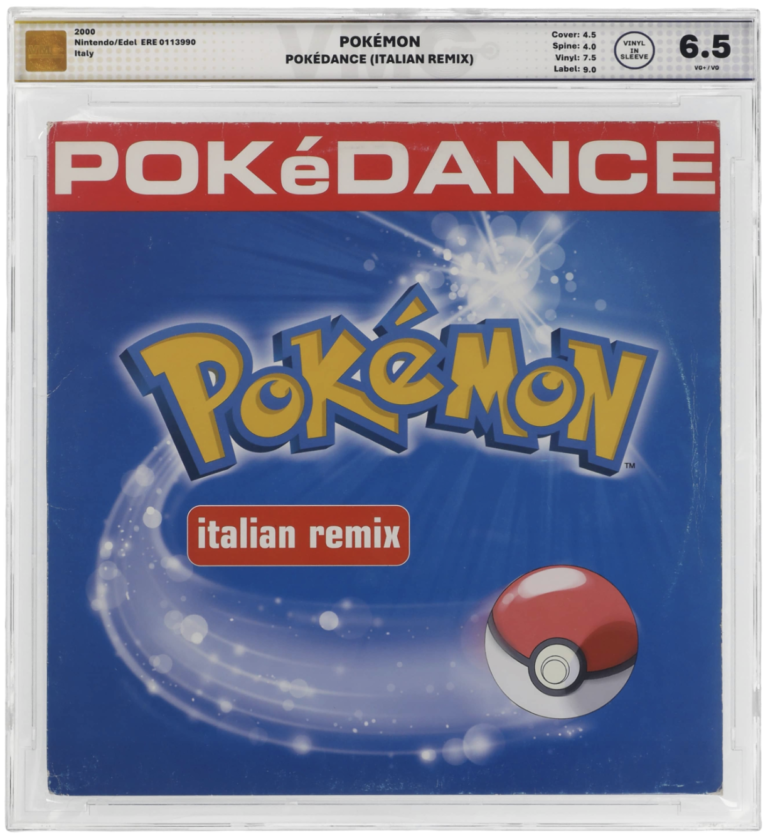
There is a certain kind of Pokémon collector who has already done everything the mainstream hobby considers ambitious. They’ve chased PSA 10 population ones. They’ve tracked down sealed first-edition product before it hit auction. They understand the difference between an item that is hard to find and an item that is genuinely rare — and they know that difference is where real value lives. For that collector, the question is never whether to take the hobby seriously. The question is always the same:
Where is the category nobody else has found yet?
It’s not in booster boxes. It’s not in holographic first editions. The sophisticated collector has already been there. The real frontier — the category with genuine zero-competition discovery potential — is sitting in a corner of the hobby that almost no serious money has touched.
Early Pokémon music collectibles. Early officially licensed records make first edition Charizard seem common.
This is that guide.
Why Early Pokémon Music Collectibles Represent One of the Last Undiscovered Categories
Pokémon is the highest-grossing media franchise in history. The trading card market is mature, institutionalized, and ferociously competitive. First-edition sealed product has been catalogued to death. But the physical music artifacts produced during the franchise’s initial global explosion — from 1999 through the early 2000s — have never been systematically collected, graded, or evaluated for investment-grade preservation.
The reasons are straightforward: these items were distributed through entirely different channels than cards and games, produced in quantities so small they rarely surface, and categorized under “music” rather than “Pokémon memorabilia” in most auction environments. That market inefficiency is precisely what makes them interesting to a serious collector right now.
Here are the three items every high-end Pokémon collector should know about.
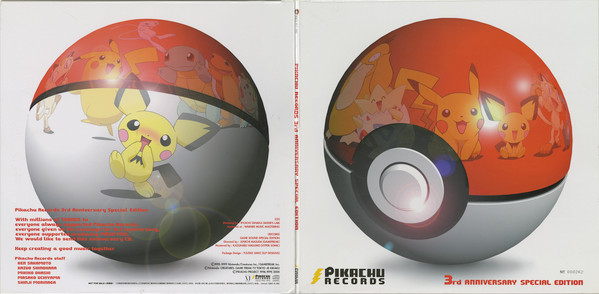
1. The First Pokémon Vinyl Record: Pikachu Records 3rd Anniversary Special Edition (2000)
The earliest known Pokémon vinyl release is the Pikachu Records 3rd Anniversary Special Edition, issued in Japan in 2000. Pikachu Records was the dedicated label created to handle Pokémon music licensing during the franchise’s late-1990s global expansion — a period of extraordinary brand velocity when official Pokémon product was being developed in every category simultaneously.
This release was not a commercial retail product. It was a commemorative, insider-facing limited edition — the kind of object produced to mark a milestone and acknowledge stakeholders at the center of the Pokémon machine. That origin is critical to understanding why it is so rare today.
The set included a 12-inch picture disc vinyl record, two CDs, and a printed insert. Each copy was individually numbered. Total production is believed to have been approximately 300 copies.
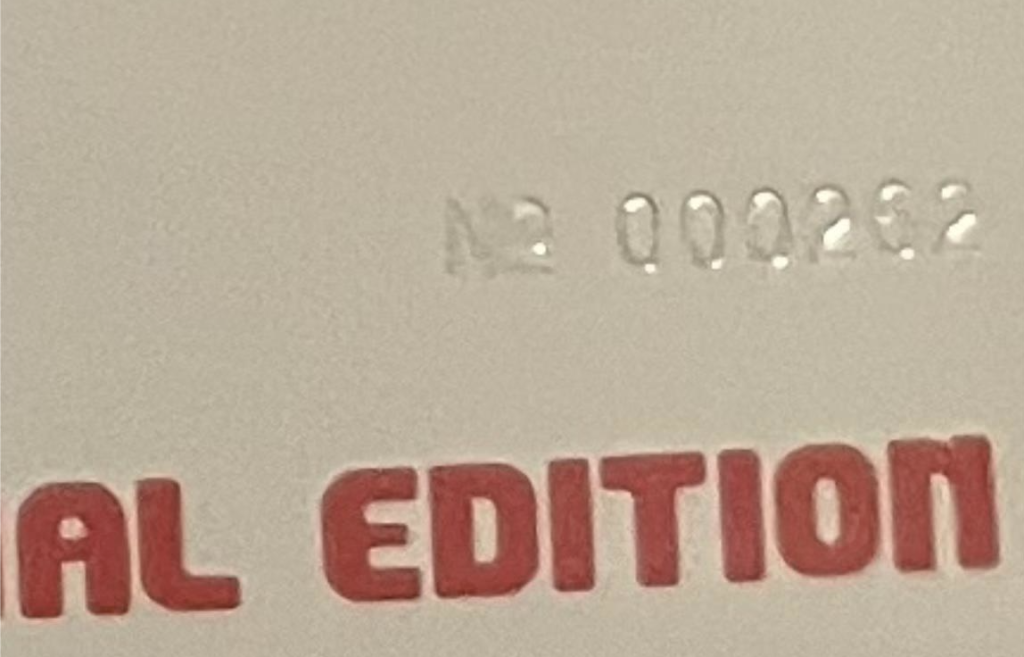
Put that number in context. Premium modern limited pressings are typically produced in runs of 500 to 1,000. At 300 copies — distributed domestically in Japan, in 2000, with no collector infrastructure around Pokémon music memorabilia at the time — the real-world survival rate of mint or near-mint condition examples is almost certainly a fraction of that total. Most copies that exist today have been stored in conditions unknown for over two decades.
When the Pikachu Records Anniversary edition surfaces for sale, it is a genuine event. This is not a record that trades hands regularly through any channel — auction houses, private collector networks, or specialist dealers. High-grade examples are, by any reasonable definition, among the rarest Pokémon collectibles in existence.
For the investment-minded collector focused on provenance, scarcity, and first-in-category positioning, this is the item.
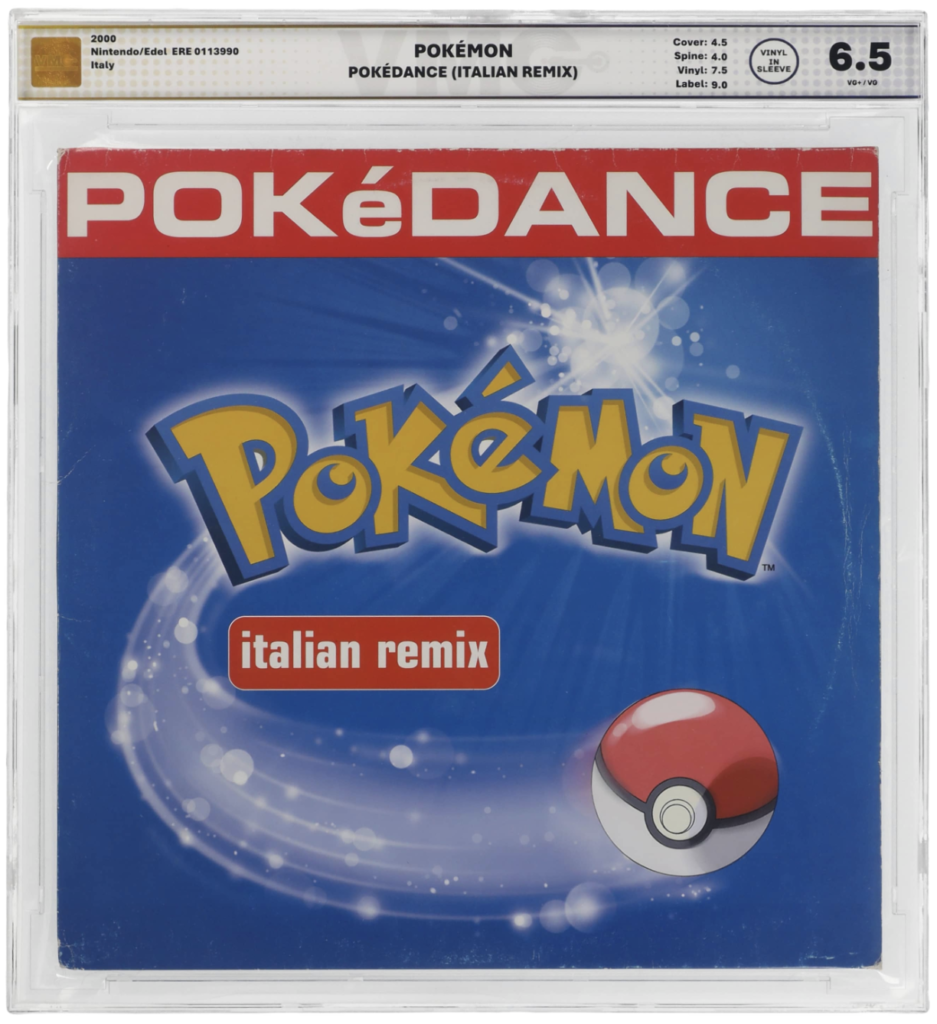
2. PokéDance Vinyl — Official Pokémon Dance Remixes (2000)
While Japan was producing commemorative records for insiders, Europe was doing something completely different with the Pokémon license.
PokéDance is an officially licensed Pokémon vinyl record released around 2000, representing one of the earliest instances of the franchise extending into the European dance music market. Two distinct variants are currently known to exist:
Variant One — French Release (Mascotte Music) Produced by Mascotte Music, a European label with a background in novelty and licensed remix projects, this record was positioned explicitly as a club product — Pokémon music processed through late-1990s European dance production and aimed at the DJ market. The Mascotte Music imprint carried official Pokémon licensing, making this one of the first officially sanctioned Pokémon vinyl releases ever pressed in Europe.
Variant Two — Italian Release A companion pressing produced for the broader European dance market, the Italian variant carries its own distinct release identity while sharing the same officially licensed Pokémon content as the French version.
Both variants occupy the same critical position in collecting history: among the first officially licensed Pokémon vinyl records ever produced, full stop.
The Condition Problem — and the Opportunity
Here is where PokéDance becomes particularly interesting for a serious collector. The vast majority of surviving copies were actively used as DJ tools. That means most examples show the full taxonomy of professional DJ wear — sleeve ring marks, seam splits, label scuffs, and playing surface degradation from repeated needle drops.
A PokéDance copy in genuinely high grade — clean sleeve, strong vinyl, minimal surface noise — is exceptionally scarce. The cultural context that makes these records historically significant (they were played in clubs; they were used) is precisely the mechanism that destroyed most of the surviving inventory.
For collectors who specialize in finding high-grade examples of items where condition has eliminated most of the population, PokéDance represents exactly the kind of challenge — and opportunity — that defines sophisticated collecting.
3. The 1999 Pokémon LaserDisc Postcard Inserts — PSA-Eligible with Zero Confirmed Graded Copies
This is the item that should stop every serious collector cold.
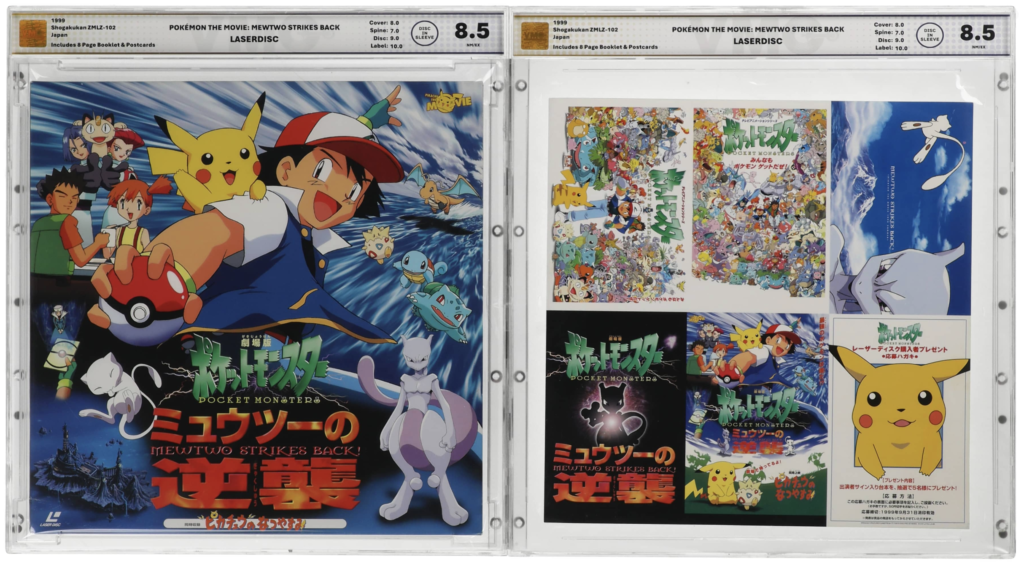
The Japanese LaserDisc release of Pokémon: Mewtwo Strikes Back was issued in 1999 — making it one of the earliest physical Pokémon home media releases ever produced. LaserDisc was a premium format that retained a committed audience in Japan longer than in most Western markets, and prestige releases like the first Pokémon theatrical film were packaged accordingly. This release included an 8-page booklet and a set of collectible postcard inserts housed within the LaserDisc package.
The PSA Population Reality
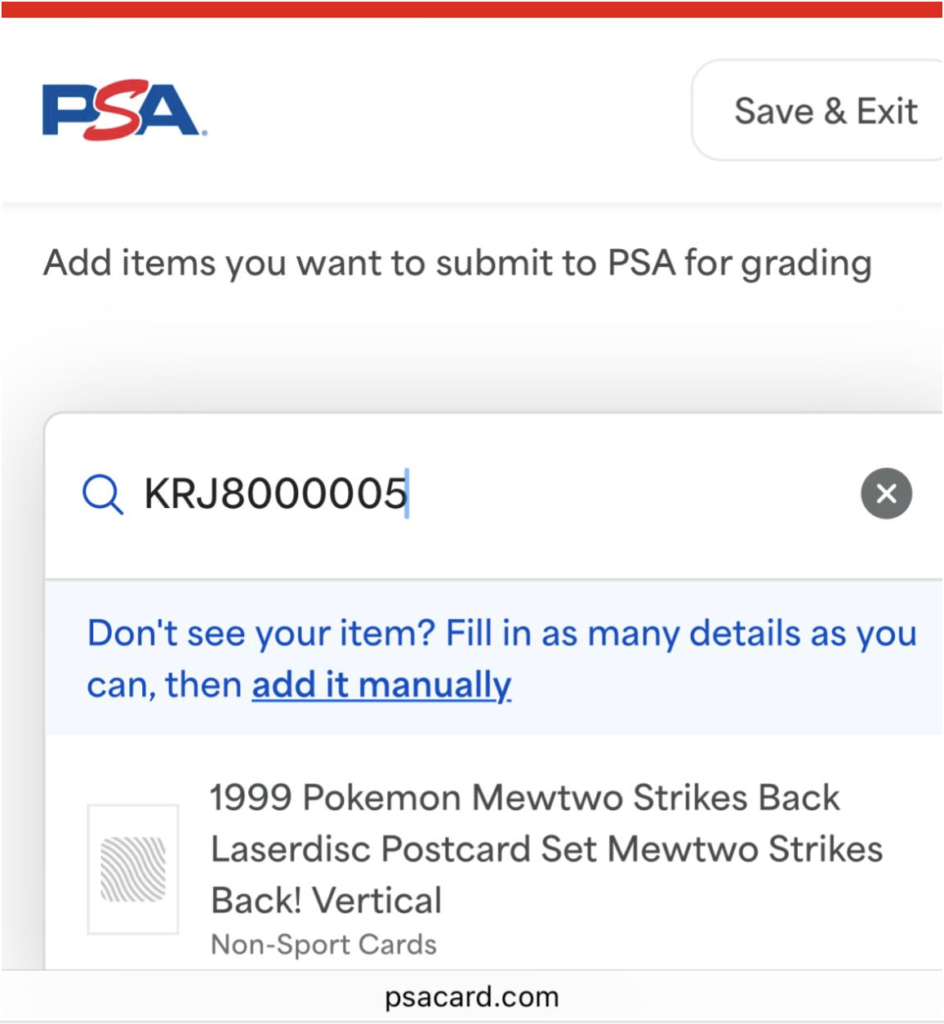
PSA does not grade LaserDiscs themselves. But PSA has established official grading specifications for the postcard inserts that were included with this 1999 LaserDisc release, recognizing them as legitimate, individually gradeable collectibles.
And here is the number that matters:
The confirmed PSA population for these postcard inserts is zero.
Zero submitted. Zero graded. The specifications exist. The items are eligible. And in nearly 25 years of organized Pokémon collecting — including a decade-long boom that has sent PSA submission volumes to record highs — no one has submitted these postcards for grading.
For any collector who understands what a zero-population PSA item means in terms of potential first-graded provenance, registry positioning, and long-term value, that sentence requires no further commentary.
The Investment Case: Why These Items Matter Now
The logic that governs high-end Pokémon collecting applies directly here. The market rewards scarcity, official licensing, provenance, and condition — in that order. Every item in this guide scores on all four criteria.
Scarcity: A 300-copy production run is not rare for a limited pressing. It is functionally unique in the context of a franchise this large. The PokéDance variants are scarcer in high grade than most graded PSA 10 Pokémon cards. And the LaserDisc postcards have never been graded at all.
Official Licensing: All three items are officially licensed Pokémon products — not bootlegs, not unauthorized releases, not regional gray-market merchandise. They carry the full weight of legitimate franchise provenance.
Condition Upside: Because these items have never been systematically collected, condition-graded examples are essentially nonexistent. The collector who establishes high-grade examples in these categories is not competing with an existing market — they are creating one.
Timing: The Pokémon collecting market has matured rapidly. Categories that represented alpha a decade ago — sealed booster boxes, first-edition holos — are now institutional. The collectors who built fortunes in those categories did so by identifying significance before the broader market. The window for that kind of positioning in music memorabilia and early media is open right now.
The Bottom Line for Serious Pokémon Collectors
The Pikachu Records 3rd Anniversary Special Edition. The PokéDance French and Italian variants. The 1999 LaserDisc postcard inserts with an open PSA population.
These are not curios. They are not novelty items for casual fans. They are among the earliest, scarcest, officially licensed Pokémon collectibles ever produced — sitting in a category that institutional collector money has not yet reached, with condition and provenance characteristics that reward exactly the kind of focused, research-driven acquisition strategy that built the great Pokémon collections of the last decade.
The question is who finds them first.
Researching or sourcing early Pokémon music memorabilia? Contact us.
Preserve the Value of Your Collection with VMG
At Vintage Media Grading (VMG), we help collectors protect and elevate the value of their vinyl records through professional grading, encapsulation, and transparent population reporting. Whether you’re preserving your favorite album or investing in rare pressings, our patented ultrasonic cases keep every record secure, display-ready, and market-proven.
Because in today’s collectible market, preservation pays off—and no one preserves music history quite like VMG.
Explore vinyl grading and encapsulation services at VMGvinyl.com